
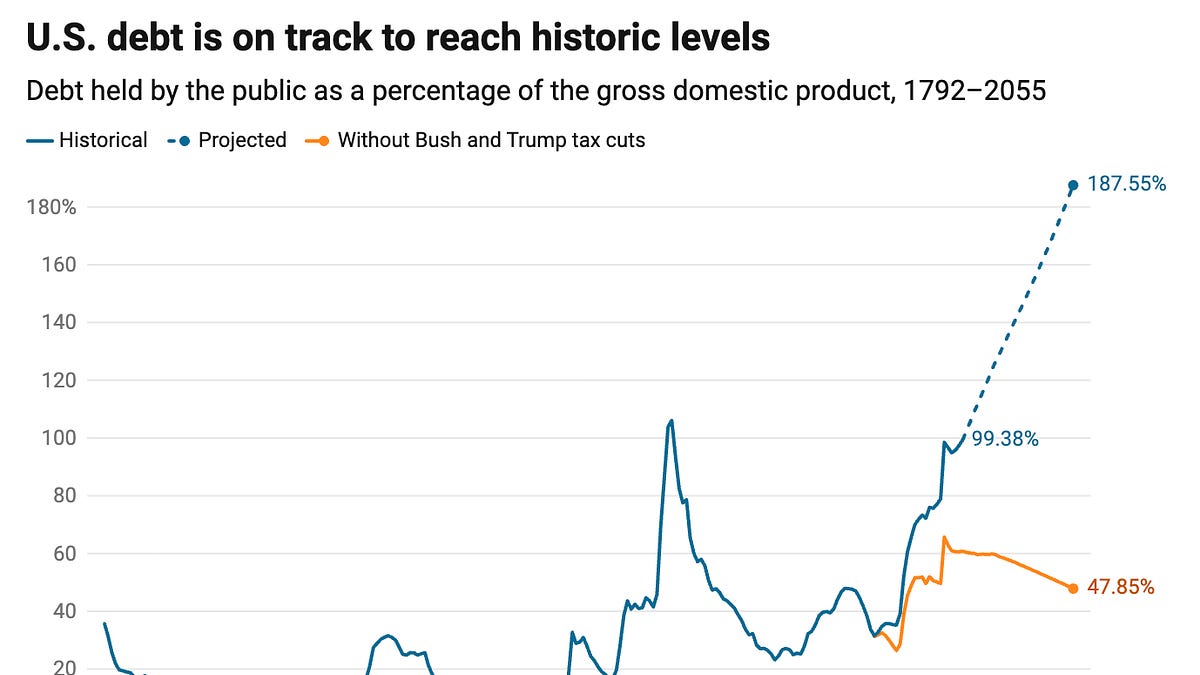
The national conversation around federal debt has reached a fever pitch recently, sparked by alarming reports that the total exceeds 40 trillion dollars. These figures have led to widespread anxiety over whether the debt has finally outpaced the size of the American economy itself. While some analysts argue these numbers are inflated through imprecise measurement and that current interest rate hikes do not necessarily signal an immediate collapse, the sheer scale of the obligation remains a legitimate cause for concern.
Political finger pointing has become the primary way of explaining this fiscal predicament. Figures like JD Vance have been quick to place the blame squarely on Joe Biden’s shoulders, while other critics point toward unchecked public spending or the inevitable costs associated with an aging population. However, looking at the broader history suggests that these explanations ignore a more systemic driver of the deficit.
A closer examination reveals that US debt would likely be significantly lower if not for massive losses in government revenue caused by successive rounds of tax cuts. From the policies implemented under George W. Bush in the early 2000s to those enacted during Donald Trump’s tenure, these reductions in tax income have played a central role in ballooning the national balance sheet. Rather than just a matter of overspending, the current crisis is deeply tied to a deliberate strategy of reducing state revenue.