
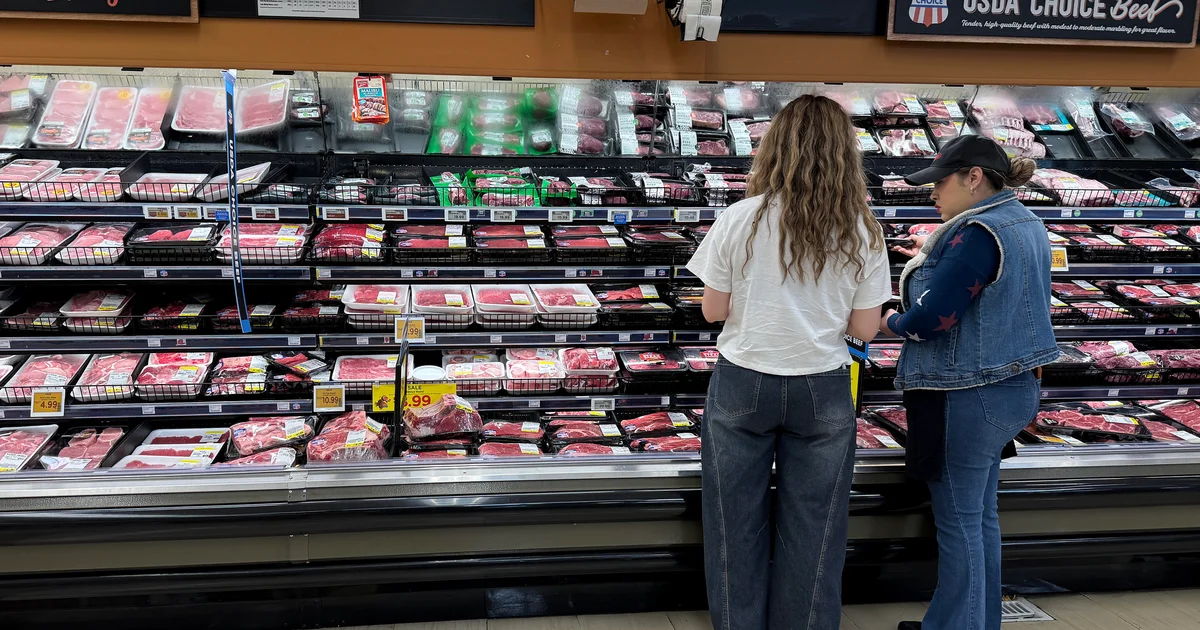
President Trump announced on Friday that the United States will temporarily waive higher tariffs on ground beef imports in an effort to bring down grocery bills for consumers struggling with record high meat costs. Taking to Truth Social to share the news, the president stated that the government will permit up to 300,000 metric tons of ground beef to enter the country over the next 90 days without out-of-quota tariffs. He claimed that there is a commitment for this imported beef to be sold at roughly 25 percent below current market rates, providing immediate relief for families while allowing domestic cattle herds time to recover.
The move comes as inflation continues to hit the dinner table hard, with ground beef reaching an average price of 6.89 dollars per pound as of July. According to data from the Federal Reserve Bank of St. Louis, these prices have surged by 57 percent over the last five years, far outpacing many other food categories. Recent reports indicate that both ground beef and steaks saw nearly ten percent increases compared to last year, prompting a spokesperson for the Department of Agriculture to note that easing these tariffs should help improve affordability amid surging demand.
Underlying these price spikes is a long term decline in the national cattle population caused largely by severe drought conditions. These weather patterns have stripped away grazing pastures, forcing ranchers to buy expensive feed or shrink their herds entirely. By July, the number of beef cows had fallen to 28.5 million head, marking a record low for that month according to the American Farm Bureau Federation. While the administration believes cutting regulations and boosting imports can stabilize the market, some critics argue that these shipments represent too small a fraction of total supply to create any meaningful change at checkout counters.
This is not the first time the administration has attempted to intervene in beef pricing; back in February, an executive order was signed to increase imports specifically from Argentina. Despite these efforts, tensions remain between policymakers and domestic livestock groups like the National Cattlemen’s Beef Association, which generally oppose increased imports fearing they may undercut American producers already struggling with environmental challenges_