
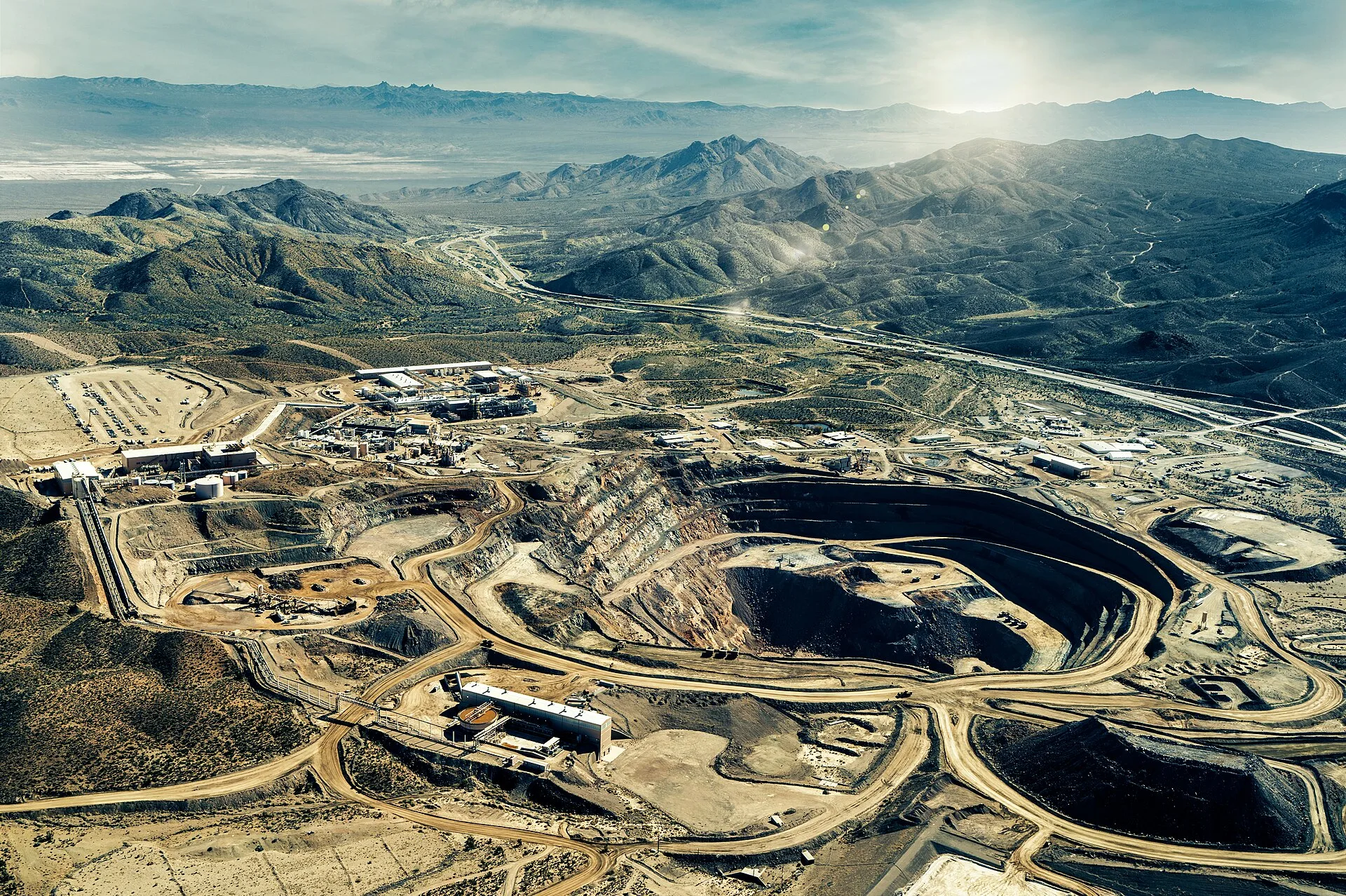
The most repeated sentence about MP Materials is also the least accurate one: that Washington “bought a stake” in the rare earth miner the way it bought a stake in Intel. It did not. The US Department of Defense put $400m into newly created convertible preferred stock plus a warrant, at a conversion price of $30.03 a share — an instrument with a liquidation preference, a conversion option and an entirely different risk profile from the ordinary common stock Washington took in Intel. One is a structured security that sits above the equity; the other is the equity. That distinction decides who eats the dilution, who captures the upside, and what happens if the business disappoints. With MP trading at $55.66 — 44.5% below its 52-week high of $100.25 — the instrument is not a footnote. It is the whole argument.
Here is the part almost every write-up gets backwards. Federal equity positions in private companies have gone from emergency measure to standing policy, a pattern the Cato Institute’s Tad DeHaven catalogued on 30 July 2026 under the headline “Government Ownership Stakes in Companies Becoming Routine Under Trump”. But those positions are not one thing. Intel’s was taken in common stock, the plainest instrument available. Lithium Americas’ is a set of penny warrants — 5% of the company’s common shares plus a separate 5% economic stake in the Thacker Pass joint venture — issued not for cash but in exchange for the DOE deferring $184m of debt service on its DOE loan, per the company’s 8-K filed 8 October 2025. MP’s is convertible preferred with a ten-year commodity price floor bolted on. Three deals, three instruments, three completely different answers to the question every investor in this sector is actually asking: what does the taxpayer’s presence on the cap table do to my shares?
And the answer, once you separate the instruments, is not flattering to the lazy version of the bull case. Run MP’s numbers: $400m converting at $30.03 buys about 13.3 million shares, worth roughly $741m at the $55.66 spot. The taxpayer is up around 85% on paper. But notice what the structure did — the government took an instrument that sits senior to common stock and converts only when it chooses. Lithium Americas went further still: its DOE warrants are penny warrants, meaning the exercise price is nominal and the government paid nothing for the equity at all, receiving it as consideration for deferring debt service. Preferred stock and penny warrants are what a counterparty negotiates when it wants the upside without the downside. That tells you how Washington itself priced the risk in strategic minerals — and it is a warning the equity market has spent the last twelve months learning the hard way.
Key facts: MP Materials at a glance
- Share price $55.66, up 2.86% (+$1.55) on the session — close of 13 August 2026 (StockAnalysis.com)
- 52-week range $37.81 – $100.25; spot sits 44.5% below the high and 47.2% above the low
- One-year change −26.2%, from $75.40 to $55.66
- Market capitalisation $9.91bn on 178.1 million shares outstanding, against trailing revenue of $416.25m — roughly 23.8x sales for a company that is not yet profitable
- Q2 2026 revenue $108.5m, up 89% year on year; adjusted EBITDA $28.5m versus $(12.5)m a year earlier; net loss $(20.3)m (MP Materials, 6 August 2026)
- DoD investment $400m in convertible preferred at a $30.03 conversion price, plus a warrant — together 15% of common on an as-converted, as-exercised basis (MP Materials, 10 July 2025)
- NdPr price floor of $110/kg for ten years, plus a ten-year offtake guarantee covering 100% of magnet output from the 10X facility
- Cash and short-term investments $1.45bn at 30 June 2026, down from $1.83bn at year-end 2025 — a first-half draw of roughly $380m
What the Department of Defense actually bought
On 10 July 2025, MP Materials announced what it called a transformational public-private partnership with the Department of Defense. The equity element was $400m of a newly created series of convertible preferred stock, convertible into common at $30.03 a share, accompanied by a warrant. Taken together and assuming full conversion and exercise, the government’s position represented 15% of MP’s issued and outstanding common stock as measured on 9 July 2025. That is the number most coverage quotes. It is also the number most coverage misreads, because 15% “as converted” is a hypothetical share count, not a present ownership position.
The equity was the smallest part of the package. Alongside it came a $110 per kilogram price floor on neodymium-praseodymium (NdPr) oxide running for ten years — a direct commodity hedge underwritten by the US taxpayer. There was a $150m loan from the department — since restyled the Department of War — for heavy rare earth separation capacity at Mountain Pass. There was $1.0bn of construction financing committed by JPMorgan Chase Funding and Goldman Sachs Bank USA for the “10X” magnet facility, which MP sited at Northlake, Texas in February 2026 and expects to begin commissioning in 2028 at roughly 10,000 metric tonnes of annual magnet capacity. And there was an offtake commitment under which the DoD ensures 100% of the magnets produced at 10X are purchased by defence and commercial customers for the ten years following construction.
“This initiative marks a decisive action by the Trump administration to accelerate American supply chain independence,” said James Litinsky, Founder, Chairman and Chief Executive of MP Materials, in the announcement. The company has not announced any new US government equity transaction since; its most recent policy-facing publication, Project Swarm, dated 30 July 2026, is an argument about drone supply chains rather than a corporate action. Anyone who has seen a “$400m stake, July 2026” headline is reading a recycled version of a July 2025 event.
Stack that against the other two. Intel’s arrangement, agreed on 22 August 2025, put the government into common stock — roughly a 10% holding, structured as a passive position without board representation. The precise share count and consideration have been reported inconsistently across outlets, and we have flagged that in our own Intel INTC stock prediction; what is not in dispute is the instrument. Common stock is common stock. It takes the full ride in both directions.
Lithium Americas is the third model, and it is documented precisely because it went through an SEC filing. Under the omnibus waiver, consent and amendment executed on 7 October 2025, the DOE agreed to defer $184m of scheduled debt service out of the first five years of its loan — unlocking a $435m first draw — in exchange for penny warrants exercisable at $0.01 over 5% of Lithium Americas’ outstanding common shares, plus separate penny warrants over a 5% economic stake in the Thacker Pass joint venture. Lithium Americas also agreed to post an additional $120m to loan reserve accounts. The government committed no fresh capital and its warrants cost essentially nothing to exercise.
That is the taxonomy, and it matters for a simple reason. Common stock is dilutive immediately and gives the state uncapped exposure to both directions. Convertible preferred is dilutive only on conversion, sits senior in a wind-down, and hands the state downside protection the ordinary shareholder does not have. Penny warrants cost the issuer no cash up front and dilute only if the equity works. If you own MP common stock, you sit behind a preferred instrument already struck deep in the money. That is not a disaster. It is simply not the same thing as having the Treasury standing shoulder to shoulder with you in the ordinary shares — and the distinction is worth more to your risk assessment than any of the headline stake percentages.
Why the stock is still 44.5% below its high
Here is the tension that defines MP Materials in August 2026. The policy backstop is arguably the strongest in the government’s whole portfolio of corporate positions — rare earths are the least ambiguous national security case on the list, because unlike semiconductors or lithium there is effectively no Western alternative to Chinese separation and magnet capacity at scale. And yet the stock has fallen 26.2% over twelve months, from $75.40 to $55.66, and sits 44.5% below its 52-week high.
The market, in other words, is not pricing the politics. It is pricing execution and Chinese price pressure. Both are visible in the Q2 2026 numbers.
Revenue of $108.5m was up 89% year on year, and adjusted EBITDA swung to a positive $28.5m from $(12.5)m. Those are genuinely good prints. But the operational detail is mixed. NdPr production rose 41% to 840 metric tonnes and NdPr sales jumped 127% to 1,006 tonnes — a company selling meaningfully more than it produced in the quarter, drawing down inventory. Meanwhile rare earth oxide production in concentrate fell 16% to 11,072 tonnes. The upstream mine is not growing; the midstream refining is. And the company still lost $20.3m at the net line.
Now the number that settles the argument, and it is buried in the 10-Q rather than the earnings release. The price floor is not theoretical — it is being paid right now. MP recognised $17.6m of income under the price protection agreement in Q2 2026, and $59.9m across the first half, which means the benchmark NdPr price sat below $110/kg for the entire six months and the US government covered the shortfall every quarter (MP Materials Form 10-Q, filed 7 August 2026).
Work it through. MP booked $94.4m of NdPr oxide and metal revenue on 1,006 tonnes sold — roughly $93.9/kg realised in the market. Add the $17.6m top-up and the effective price becomes about $111.3/kg. In other words, on our calculation close to 16% of MP’s NdPr revenue in the quarter came from the taxpayer rather than from a customer. That is not a subsidy at the margin of this business. On the most important product line, it is a material part of the revenue. Strip it out and the economics are set in Beijing.
One caveat that cuts the other way, and it matters for the bull case. First-half PPA income of $59.9m implies roughly $42.3m in Q1 against $17.6m in Q2 — the shortfall shrank about 60% quarter on quarter. NdPr prices are climbing back toward the floor, not falling away from it. That is the single most encouraging trend in the filing.
Then there is the cash. MP held $1.45bn in cash and short-term investments at 30 June 2026, down from $1.83bn at the end of 2025 — a first-half draw of about $380m as 10X construction accelerated. That is a manageable burn against a $9.91bn market capitalisation, but it is a burn, and the heaviest capital spending on a 2028 commissioning date has not happened yet. This is a capital-intensive industrial build being valued at 23.8 times trailing sales, which is a technology multiple attached to a mining balance sheet. The same disconnect has punished other policy-favoured industrials this year, from small modular reactors — see our NuScale SMR stock prediction — to the broader Western mining listings covered in Baron Securities’ London push for Canadian miners.
Price levels: where $82 and $38 sit
MP Materials share price with bull and bear targets mapped against the 52-week range. Price data: StockAnalysis.com, close of 13 August 2026.
To be explicit about direction, because a price-target article that gets this backwards is worse than useless: the $82.00 bull case sits above the current price of $55.66, and the $38.00 bear case sits below it.
- Bull case $82.00 — that is +47.3% above the $55.66 spot. It is also 18.2% below the 52-week high of $100.25, which makes this a recovery target rather than a new-high target. MP has traded at $82 within the past year.
- Bear case $38.00 — that is −31.7% below the $55.66 spot. It sits just 0.5% above the 52-week low of $37.81, which makes it a retest of the low rather than a new-low scenario.
- Sell-side consensus $75.28, or +35.3% from spot, on a Strong Buy rating across 18 analysts — 13 Strong Buy, 5 Buy, no Holds or Sells (StockAnalysis.com, 13 August 2026). The published range runs from a high of $100 to a low of $58. Note that even the most bearish analyst on the tape sits above our $38 bear case, while Canaccord Genuity’s George Gianarikas is at exactly $82 — our bull number. Our bear case is deliberately outside the sell-side range.
- The DoD conversion price of $30.03 is 46.1% below spot. Even in the bear case at $38, the government’s preferred remains meaningfully in the money — which is precisely why the state’s position tells you far less about MP’s equity risk than commentators assume.
The $82 bull case: +47.3% above spot
The bull case does not require a rare earth mania. It requires three things to line up.
First, 10X execution on schedule. The Northlake, Texas campus was sited in February 2026 with commissioning targeted from 2028 and roughly 10,000 tonnes of annual magnet capacity. Magnets are where the margin lives — MP has spent five years arguing that the value in rare earths is downstream of the mine, and the Q2 mix (NdPr up, oxide-in-concentrate down 16%) shows management acting on that thesis rather than merely stating it. Every construction milestone that lands on time converts a 2028 promise into a discountable cash flow, and at 23.8x trailing sales the multiple is entirely a function of how credible that 2028 number looks.
Second, the offtake removes the demand question. The commitment that 100% of 10X magnet output is purchased for ten years following construction is, functionally, a take-or-pay contract with the strongest counterparty in the world. Very few industrial builds anywhere carry that. Combined with the $110/kg NdPr floor, MP has both a price hedge and a volume hedge on its core product for a decade — a combination that should compress the risk premium the market is currently applying.
But read the floor’s small print, because it is genuinely two-sided and almost nobody reports the second half. The price protection agreement runs from 1 October 2025 to 31 December 2035, and when the benchmark rises above $110/kg — with 10X at full capacity — MP pays the government 30% of the excess. The taxpayer did not buy a floor; it bought a collar. That caps a slice of the upside in exactly the scenario the bulls are underwriting, and it is another reminder that the instrument, not the headline, is where the economics live.
Third, demand is being locked in ahead of the plant. On 30 July 2026 MP published Project Swarm, an initiative aggregating magnet demand across US and allied drone makers, motor and propulsion suppliers and defence technology firms, reserving 10X capacity at Northlake and offering earlier access at its Independence facility in Fort Worth. MP says several drone manufacturers have signed term sheets; no dollar figures were disclosed. The regulatory hook underneath it is that US defence acquisition rules on sintered NdFeB magnets extend across the supply chain in 2027, which converts a preference for domestic magnets into a requirement.
Fourth, the balance sheet holds. $1.45bn of cash plus $1.0bn of committed construction financing from JPMorgan and Goldman, plus the $150m DoD loan, covers a lot of the build without a dilutive equity raise. Avoiding that raise is arguably the single largest swing factor in the share price between here and 2028.
Get all three and $82 is not aggressive. It is the price the stock traded at inside the last twelve months, applied to a business with materially better EBITDA, higher NdPr volumes and a de-risked funding path than it had then. What it is not is a bet on the government stake. The preferred was struck at $30.03; it does nothing for common holders at $82 except dilute them.
The $38 bear case: −31.7% below spot
The bear case is simpler and, uncomfortably, needs fewer things to go wrong.
China sets the price, and the floor proves it. A $110/kg government floor only exists because the market price is capable of going below it. Chinese separation and magnet capacity dwarfs everything in the West combined, and the marginal cost curve there is lower. If Beijing chooses to defend market share on price — as it has repeatedly across solar, batteries and refined lithium — MP’s realised prices compress toward the floor and the taxpayer, not the customer, makes up the difference. That is fine for MP’s cash flow and terrible for MP’s multiple, because a company earning a legislated price is valued as a utility, not as a growth stock. In fairness to the bulls, this is the bear argument currently working least well: the PPA shortfall shrank roughly 60% between Q1 and Q2 2026, and China agreed in November 2025 to suspend the expanded export controls it had rolled out through that year as part of a US-China trade understanding. Prices are recovering. The risk is that the suspension is a policy choice Beijing can reverse, not a structural change. The same dynamic that repriced Western memory and chip names when Chinese capacity arrived — documented in our coverage of CXMT’s 466% Shanghai debut and its effect on Micron and SK Hynix — is the template.
The capital structure is heavier than the cash balance suggests. The $1.45bn cash figure is the number bulls quote; the 10-Q also shows $862.8m of 2030 convertible notes outstanding, a $150m Samarium project loan, and net long-term debt of roughly $934.6m against total liabilities of $1.36bn. The converts carry a conversion price near $21.74, far below spot, so they are effectively equity-in-waiting. Sitting above all of it is the government’s Series A preferred, carried at a liquidation preference of $428.1m at 30 June 2026. Common shareholders are at the back of a longer queue than the headline balance sheet implies.
Execution slips are expensive at this multiple. Oxide production already fell 16% year on year. Q2 NdPr sales of 1,006 tonnes exceeded production of 840 tonnes, meaning inventory did some of the work; that is not repeatable indefinitely. A 2028 commissioning date that becomes 2029, or a capital cost overrun on a first-of-its-kind US magnet campus, hits a stock trading at 23.8x sales far harder than it would hit a conventional miner at 1.5x. The cash draw of $380m in a single half-year is the number to watch each quarter.
Policy is not permanent. The federal equity programme Cato documented is an administration policy, not a statute. Contracts survive administrations; enthusiasm does not, and neither necessarily does the appetite to fund a floor that may cost real money. Note that the arrangement is asymmetric by design: the DoD’s preferred sits senior and its conversion is struck at $30.03. If MP’s equity fell to $38, the government’s position would still be well in the money while common holders absorbed a 31.7% loss.
Put those together and $38 is a retest of the 52-week low of $37.81, not a collapse into uncharted territory. It is where the stock goes if the market decides MP is a subsidised commodity processor rather than a strategic growth asset. The company itself has not commented on any specific price level, and nothing here reflects guidance — MP provided no forward guidance with its Q2 2026 results.
The regulatory tension nobody wants to name
There is an unresolved contradiction sitting inside every one of these deals, and it is sharper at MP than anywhere else in the portfolio.
The state is simultaneously MP’s largest strategic shareholder-in-waiting, its price-floor underwriter, its lender, and the guarantor of its customer base. Those roles conflict. A price floor funded by the taxpayer creates an incentive to maximise volume into the floor rather than to compete on cost. An offtake guarantee removes the commercial discipline of having to win customers. And a preferred instrument held by a regulator that also sets export policy on the same commodity is a governance question no US listed company has previously had to answer at this scale.
None of this is illegal or even unusual by the standards of industrial policy elsewhere — it is roughly how Japan and Korea built their materials sectors. But it is new for a NYSE-listed equity, and the market’s 44.5% discount to the high is at least partly a discount for that novelty. Investors do not yet have a valuation framework for a company whose price, volume and capital structure are all partly set by policy. Nor, judging by the fact that the sell-side consensus of $75.28 sits 35.3% above spot while the shares keep drifting, does the sell-side.
The comparison with defence-adjacent software is instructive here — companies like Palantir, covered in our Palantir PLTR stock prediction, carry government revenue concentration without government ownership, and the market has been far more willing to pay up for that. Revenue from the state is a contract. Equity held by the state is a relationship, and relationships get repriced.
What happens next
Three concrete expectations, with the reasoning attached.
1. The next two quarters are about oxide production, not headlines. Q2’s 16% decline in rare earth oxide production in concentrate is the metric that most directly threatens the 2028 magnet ramp, because 10X needs feedstock. If Q3 2026 shows oxide output stabilising while NdPr volumes keep climbing, the bull path to $82 stays open. If oxide falls again while NdPr sales continue to outrun production, the inventory cushion thins and the bear case gains its most credible catalyst.
2. Expect more preferred-and-warrant structures, not more common-stock purchases. Taking common stock exposes the taxpayer to the full downside and invites the charge that the state is punting public money on a single equity. The MP structure — preferred, senior, with a price floor and an offtake — and the Lithium Americas structure — penny warrants for a debt concession — both achieve the strategic goal while protecting the government if the company disappoints. As the portfolio grows, those are the templates that are easier to defend politically, and investors in the next strategic-minerals listing should expect to sit behind a preferred rather than alongside common.
3. The valuation gap closes downward before it closes upward. A stock at 23.8x trailing sales with a $20.3m quarterly net loss and a 2028 revenue inflection is carrying a lot of duration. In an environment where commodity-linked equities have been volatile — see our recent gold market coverage — that duration is the first thing sold. The path from $55.66 to $82 most plausibly runs through a lower number first.
The honest summary is that MP Materials is the clearest national-security case in Washington’s equity portfolio and simultaneously one of its hardest equities to value. The policy backstop is real, verified and generous. It is also, at $110/kg and a decade-long offtake, an admission that this business does not yet stand on its own economics. Both of those things are true, and the 44.5% drawdown from the high is what it looks like when a market tries to hold them at once.
Frequently asked questions
Did the US government buy a $400m stake in MP Materials in July 2026?
No. The $400m figure is accurate but the date is not. The Department of Defense announced the investment on 10 July 2025, and it was structured as convertible preferred stock at a $30.03 conversion price plus a warrant — together 15% of common on an as-converted, as-exercised basis. MP Materials has announced no new US government equity transaction in July or August 2026.
What is MP Materials’ share price today?
MP Materials closed at $55.66 on 13 August 2026, up 2.86% or $1.55 on the day, with a session range of $53.25 to $56.02 and volume of 6.33 million shares. That leaves the stock 44.5% below its 52-week high of $100.25 and 47.2% above its 52-week low of $37.81.
How is the MP Materials government stake different from Intel’s?
Intel’s, agreed 22 August 2025, was taken in common stock as a roughly 10% passive position. MP’s is convertible preferred plus a warrant, converting at $30.03. Common stock takes the full downside; preferred sits senior with a liquidation preference and converts only when it suits the holder. Lithium Americas is a third structure again — penny warrants over 5% of its shares and 5% of the Thacker Pass JV, granted in October 2025 in exchange for the DOE deferring $184m of debt service rather than for cash.
What is the $110/kg NdPr price floor?
Under the July 2025 DoD partnership, the US government guarantees MP Materials a floor price of $110 per kilogram on neodymium-praseodymium oxide for ten years. If the market price falls below that level, the shortfall is covered. It is a direct commodity hedge for MP and, in practice, the single most important line item in the company’s economics.
Is the $82 bull case above or below the current price?
Above. At $55.66 spot, the $82.00 bull target represents 47.3% upside, and it remains 18.2% below the 52-week high of $100.25 — so it is a recovery to a level the stock traded at within the past year, not a breakout to new highs. The $38.00 bear case is 31.7% below spot and sits 0.5% above the 52-week low.
What would break the bull case fastest?
A further decline in rare earth oxide production in concentrate, which fell 16% year on year in Q2 2026. The 10X magnet campus needs upstream feedstock to justify its 2028 commissioning. A second consecutive decline, combined with NdPr sales continuing to exceed production and draw down inventory, would undermine the ramp story that the current 23.8x sales multiple depends on.
Where do analysts see MP Materials going?
The sell-side consensus price target is $75.28, roughly 35.3% above the $55.66 spot, on a Strong Buy consensus rating (StockAnalysis.com, 13 August 2026). That sits between the $38 bear case and the $82 bull case, and nearer the bull.
Disclaimer: This article is analysis and information only. It is not investment advice, nor a recommendation to buy or sell any security. Price targets are scenario analysis, not forecasts, and shares can fall as well as rise. All prices are as at the close of 13 August 2026 and will have changed. Readers should conduct their own research and consider taking independent financial advice before making any investment decision.